Oil Tops $100 a Barrel as Wall Street Claws Back From Its Worst Week in Months
Stocks snapped a four-day losing streak Friday as crude eased off its Iran-war spike, even as sticky inflation data kept a Fed rate hike squarely on the table.
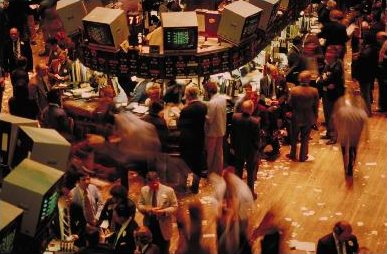
Wall Street clawed back much of a brutal week's losses on Friday, with all three major indexes posting solid gains as oil prices eased off their recent highs and a closely watched inflation reading landed close to expectations.
The Dow Jones Industrial Average rose 509 points, or about 1%, to close at 52,573.29. The S&P 500 gained roughly 65 points, or 0.9%, to 7,656.98, and the Nasdaq composite added about 251 points, or 1%, to 26,333.04, according to TheStreet. It was the first positive session after four straight days of declines.
Oil Still Elevated on Iran War Fears
Even with Friday's market relief, crude prices remain historically high. Oil topped $100 a barrel this week for the first time since July, with Brent crude trading near $104 and U.S. West Texas Intermediate near $103, as the widening war between the U.S. and Iran continues to threaten global crude supply.
THE LARGEST OIL SUPPLY DISRUPTION ON RECORD, ANALYSTS SAY
A large-scale U.S.-Israeli attack on Iran earlier this year prompted Tehran to threaten a near-closure of the Strait of Hormuz — a waterway that carries roughly a fifth of the world's crude supply — setting off what commodities analysts describe as the largest oil supply disruption on record. Gulf Cooperation Council diplomats were expected to meet Iranian counterparts in Oman this week to discuss a possible temporary arrangement for managing shipping through the strait, which has offered some relief to prices.
The oil-driven inflation risk is complicating the Federal Reserve's plans. With a rate decision due Sept. 16, money markets are pricing in close to a 90% chance of another hike, as policymakers weigh persistently elevated energy costs against a labor market and broader economy that have shown signs of cooling.
For everyday Americans, the practical effect shows up at the gas pump and on grocery bills, where higher fuel and shipping costs continue to ripple through prices — a dynamic likely to remain front and center in the run-up to November's midterm elections.