Trump Lawyers Tell Appeals Court the President's Own Papers Don't Belong to the Public
In oral arguments Friday before a D.C. Circuit panel, Justice Department lawyers argued the post-Watergate Presidential Records Act is unconstitutional — a claim that could gut nearly 50 years of public access to White House documents and may be headed for the Supreme Court.
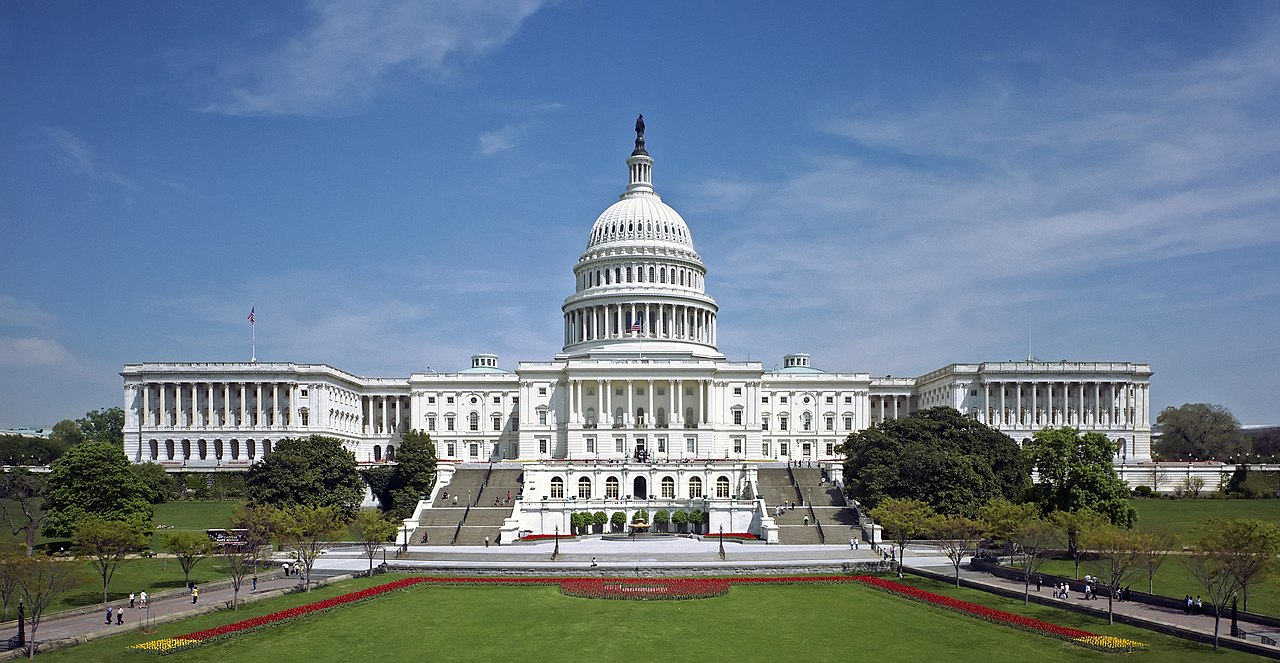
A federal appeals court in Washington heard arguments Friday on a Trump administration claim that could upend how every future president's papers are handled: that the records created inside the White House belong to Donald Trump personally, not to the American people. Three judges on the U.S. Court of Appeals for the D.C. Circuit heard the case, which could ultimately land at the Supreme Court.
The fight traces back six months, to an April 1 Justice Department legal opinion that declared the Presidential Records Act — the 1978 law requiring presidents to preserve their official records — unconstitutional. Conservative lawyer Michael Edney, who has argued the administration's position publicly, called the law "a post-Watergate, overbroad statutory incursion into the prerogatives of the executive branch." White House spokeswoman Lauren Bis put it more bluntly: "The Presidential Records Act is unconstitutional and a clear violation of the separation of powers."
A judge, an Orwell quote, and an injunction
Watchdog groups including Citizens for Responsibility and Ethics in Washington, the American Historical Association and American Oversight sued to block the administration's reinterpretation. In May, Senior U.S. District Judge John Bates — a George W. Bush appointee — ruled against the White House and ordered it to keep preserving records while the case proceeded, opening his decision with a line from George Orwell's 1984: "Who controls the past controls the future; who controls the present controls the past." That ruling is what the Justice Department is now appealing.
"If the courts were to accept it ... it would mean the people really have no right of access to the president's papers, and that would be a major loss for archivists, historians and to the American people writ large." — Nikhel Sus, chief counsel, Citizens for Responsibility and Ethics in Washington
The dispute isn't abstract to the current administration. It comes after Trump was indicted on obstruction charges over classified documents found stockpiled at Mar-a-Lago — a case a federal judge later threw out on technical grounds before the Justice Department dropped it following his reelection. Former officials warn that letting presidents control their own records would cut off a vital resource for their successors. John Bellinger, who served as the National Security Council's legal adviser under President George W. Bush, said aides often needed to consult the papers of prior administrations to understand what a foreign leader had told an American president, or vice versa: "Access to the records on national security issues of former presidents is really vital for the continuity of our government."
More than 100 members of Congress weighed in on the side of the historians and watchdog groups in an amicus brief filed in August, underscoring how far the fight has spread beyond the courtroom.
What's next
Edney, who also worked in Bush's NSC and Justice Department, said he believes the administration wants the fight to reach the Supreme Court on its own terms — "at a time of their choosing, with arguments of their choosing, and a court of their choosing." The three-judge D.C. Circuit panel did not rule from the bench Friday; a written decision, and likely a further appeal regardless of the outcome, is expected in the weeks ahead.