HOME / US / HAWAI'I VOLCANOES NATIONAL PARK, HAWAII
Gone Forever: Hawaii's 550-Year-Old Sea Arch Collapses Into the Pacific
The Hōlei Sea Arch — a 90-foot lava-rock icon of Hawai'i Volcanoes National Park that rangers warned for years could crumble "without notice" — is officially gone, swallowed by the ocean sometime last week.
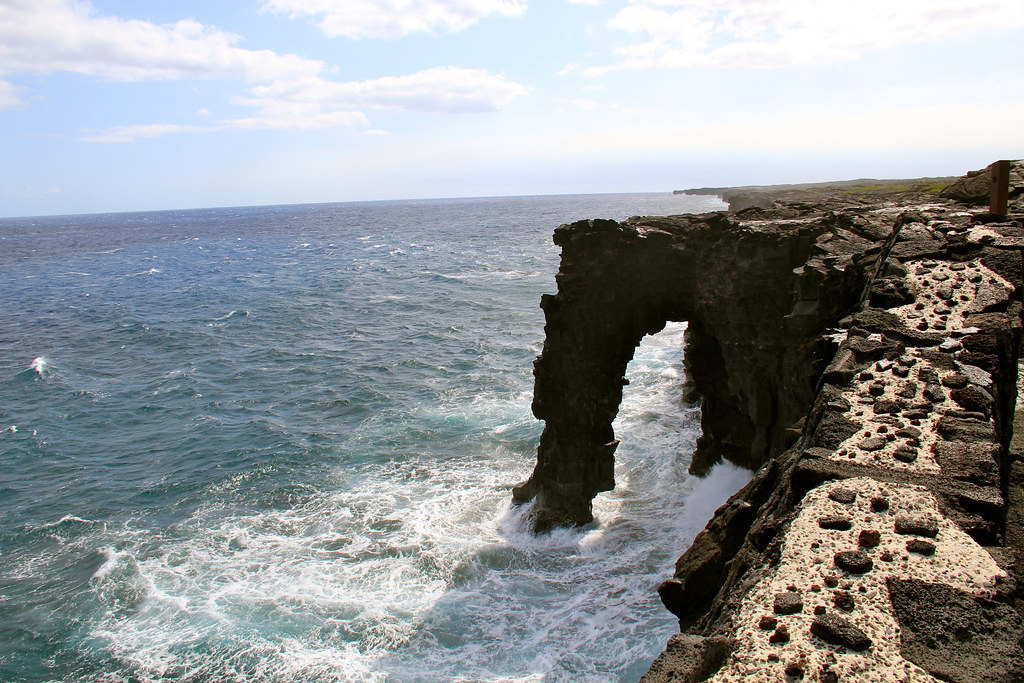
Hawai'i Volcanoes National Park confirmed this week that one of its most photographed landmarks is gone for good: the Hōlei Sea Arch, a 90-foot lava-rock bow that had stood sentinel over the Big Island's southern coastline for roughly 550 years, has collapsed into the Pacific Ocean.
Park officials and Google Maps both updated the site's listing to permanently closed this week, after rangers determined the arch vanished sometime between September 23 and September 29 — most likely while the coastal stretch of Chain of Craters Road was shut down during Tropical Storm Nolo. Nobody saw it happen. The viewing area had already been roped off for years, so no one was hurt, but the exact moment the arch finally gave way may never be known.
A Collapse Years in the Making
This was not a surprise ending. The Hōlei Sea Arch formed as Pacific waves patiently chewed through an ancient basalt lava flow, carving out a sea cave that eventually broke through into the graceful arch generations of visitors photographed from a scenic pullout near the end of Chain of Craters Road. The 2018 eruption of Kīlauea rattled the surrounding cliffs, and new cracks spotted in 2020 forced the park to move its viewing platform further from the edge. Two years later, surf from Hurricane Darby sheared off a chunk of the arch's base, leaving what rangers described at the time as little more than a weak ankle holding the whole formation up.
"It is possible the arch could collapse into the ocean at any time without warning," the park warned visitors for years — a line that turned out to be exactly right.
News of the collapse rippled well beyond Hawai'i. The New York Times detailed the arch's sudden disappearance, while NBC News reported that the loss caught even longtime park watchers off guard, despite the years of warning signs. Local Hawaii outlets and national affiliates alike ran before-and-after images showing the graceful span simply erased from the shoreline, and travel writers quickly began warning that the iconic photo stop is now off every Big Island itinerary for good.
Geologists note the arch's demise is less a tragedy than a preview of what's coming for the rest of the park's volcanic coastline, where sea cliffs are in a constant, violent negotiation with the ocean. The National Park Service's own guide to the park's sea arches has long cautioned that such formations are temporary by nature, destined to crumble as waves and earthquakes erode the rock that created them in the first place.
For now, park staff are expected to update trail signage and the Chain of Craters Road overlook to reflect the new, arch-less view, while repeating a safety warning aimed at disappointed sightseers: stay back from the crumbling cliff edge, which drops straight into pounding surf that has already endangered visitors and rescuers who got too close over the years. No new closures beyond the arch area itself have been announced, and the rest of the scenic drive remains open.